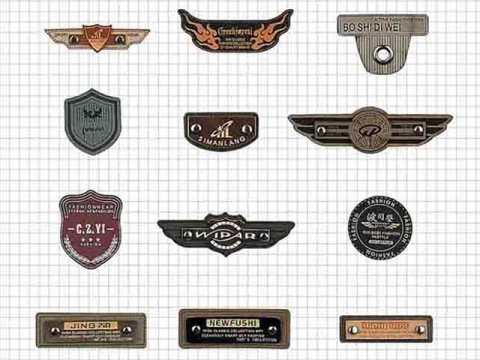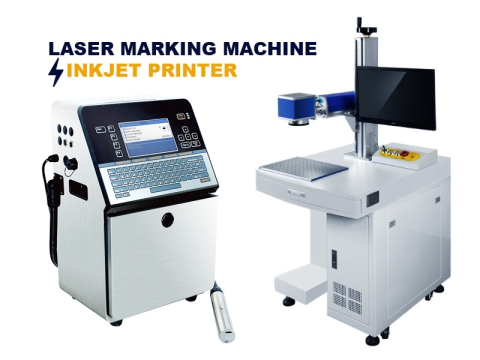
With the development of the global manufacturing industry towards refinement, intelligence, and customization, lasers have been widely used in industrial manufacturing, biomedical, military and other fields due to its good monochromaticity, directionality, brightness and other characteristics. The global industrial chain. As the division of labor in the laser industry continues to mature, the application range of lasers in micromachining has become more and more extensive. In daily life, laser micromachining can be seen everywhere. In addition, laser micromachining technology can be seen everywhere in electronic product marking, electrical enclosure marking, food and drug production date marking, consumer electronics micromachining, cutting and welding of mobile phone metal enclosures. In addition, laser machining is also used in PCB/FPCB board cutting and sub-boarding, ceramic punching and scribing, glass, sapphire, wafer cutting and micro-punching.
Let's Get to Know the Six Major Processes of Laser Micromachining.
Laser micromachining is an industrial application of laser technology. It focuses a certain power of laser on the processed object so that the laser interacts with the object to heat, melt or vaporize the processed material to achieve the processing purpose. It's a type of laser beam machining (LBM). At present, laser micromachining applications in the laser manufacturing industry mainly include laser cutting, laser marking, laser welding, laser engraving, laser surface treatment, and laser 3D printing.
Laser Cutting
Principle: Use a focused high-power density laser beam to irradiate the workpiece to quickly melt, vaporize, ablate or reach the ignition point of the irradiated material. At the same time, the molten material is blown away by the high-speed airflow coaxial with the beam to cut the workpiece.
Features: High cutting speed, smooth and beautiful surface, one-time processing, small workpiece deformation, no tool wear, low cleaning pollution, can process metal, non-metal and non-metal composite materials, leather, wood, fiber, etc., suitable for car body thickness fine cutting of sealed devices such as boards, auto parts, lithium batteries, pacemakers, sealed relays, and various devices that do not allow welding pollution and deformation.
Laser Marking
Principle: Use high-energy density laser to locally irradiate the workpiece to vaporize the surface material or cause a chemical reaction of color change, thereby leaving a permanent mark.
Features: It's non-contact processing and can be marked on any special-shaped surface. The workpiece will not deform and generate internal stress. It has high processing accuracy, fast processing speed, clean and environmentally friendly, low cost, suitable for metal, plastic, glass, ceramics, and wood. , Leather and other materials.
Laser Welding
Principle: Use high-energy-density laser beam radiation to heat the surface of the workpiece, and the surface heat diffuses into the interior through heat conduction. By controlling the width, energy, peak power and repetition frequency of the laser pulse, the workpiece is melted to form a specific molten pool.
Features: Weldability is reduced, not affected by magnetic fields, small space restrictions, no electrode pollution, suitable for automatic high-speed welding, can weld metals of different properties, can work in enclosed spaces, suitable for circular saw blades, acrylic, spring gaskets, copper plates for electronic parts, some metal mesh plates, iron plates, steel plates, phosphor bronze, bakelite, thin aluminum alloys, quartz glass, silicon rubber, alumina ceramic sheets below 1mm, titanium alloys used in the aerospace industry, etc.
Laser Engraving
Principle: Laser irradiates the surface of the material, and the material instantly melts or vaporizes after absorbing energy, forming a scribe line.
Features: Automatic number skipping, small heat-affected area, fine lines, cleaning and abrasion resistance, environmental protection and energy saving, saving materials, can be used for wood products, plexiglass, metal plate, glass, stone, crystal, paper, two-color board, alumina , Leather, resin and other materials etching.
Laser Surface Treatment - Laser Cleaning
Principle: Use laser to heat the surface of materials to achieve cleaning.
Features: High machining speed, small component deformation, precise processing, automatic quenching treatment effect, suitable for rust removal, coating removal, paint stripping, oil cleaning, and more applications.
3D Laser Printing
Principle: A powder spreading roller is used to spread a layer of powder on the surface of the workpiece, and the laser beam scans the powder layer according to the contour section of the powder layer, so that the powder is melted and sintered to realize the bonding of the workpiece.
Features: Simple machining technology, wide range of materials that can be processed, high processing accuracy, no supporting structure, high material utilization rate, combined with computer numerical control technology and flexible manufacturing technology, can be used for mold and model manufacturing.
The Development of Laser Micromachining Applications
At present, the market share of fiber lasers is higher than that of solid-state lasers. The main reason is that fiber lasers are mainly used for high-power macro processing, and the market demand is consistent with the development stage of the manufacturing industry; solid-state lasers are mainly used for laser micromachining, although the laser micromachining market is in a rapid development stage. However, the current market capacity is smaller than the micromachining market capacity, but high-precision manufacturing such as wearable devices, semiconductor chips, medical care, and new energy still needs to rely on laser micromachining.
Although various types of laser machines focus on different industrial applications, and the market demand for downstream applications is quite different, there are certain differences in their market scales. However, as the global industrial laser machine market continues to grow, the application of laser micromachining in the industrial and consumer sectors will continue to increase in the future.