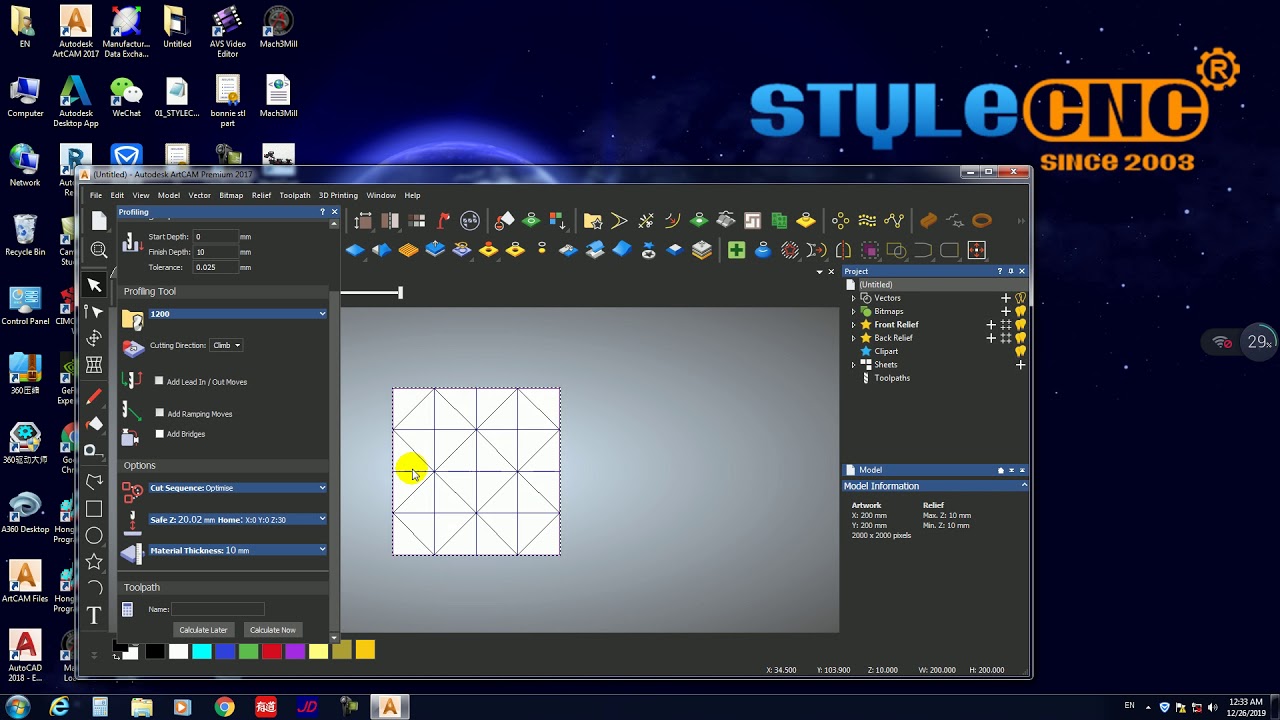
ArtCAM is a relief-design and toolpath software for CNC routers, originally developed by Delcam and discontinued by Autodesk in March 2018. Its successor, Carveco, retains the same workflow for importing 3D models, generating roughing and finishing toolpaths, and exporting code for any CNC controller.
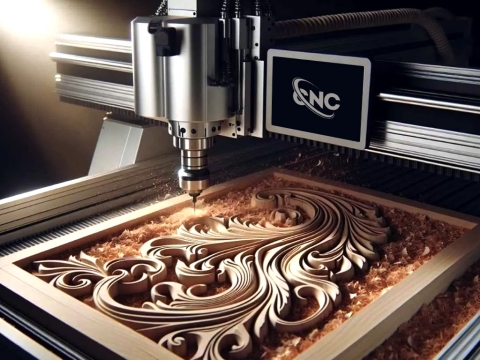
ArtCAM provides a series of three-dimensional machining options, which can not only generate the entire relief machining tool path, but also generate a tool path in a specific area. Provides a range of tool types to choose from and full control of tool size. With ArtCAM, multiple tool paths can be generated. In this way, a variety of different machining strategies can be used in combination. Rough machining can be performed multiple times before finishing to cut off excess material before finishing. ArtCAM can generate a separate tool path file for each tool or combine the tool path files of a series of tools into one large file, depending on whether your CNC router machine has a tool change function.
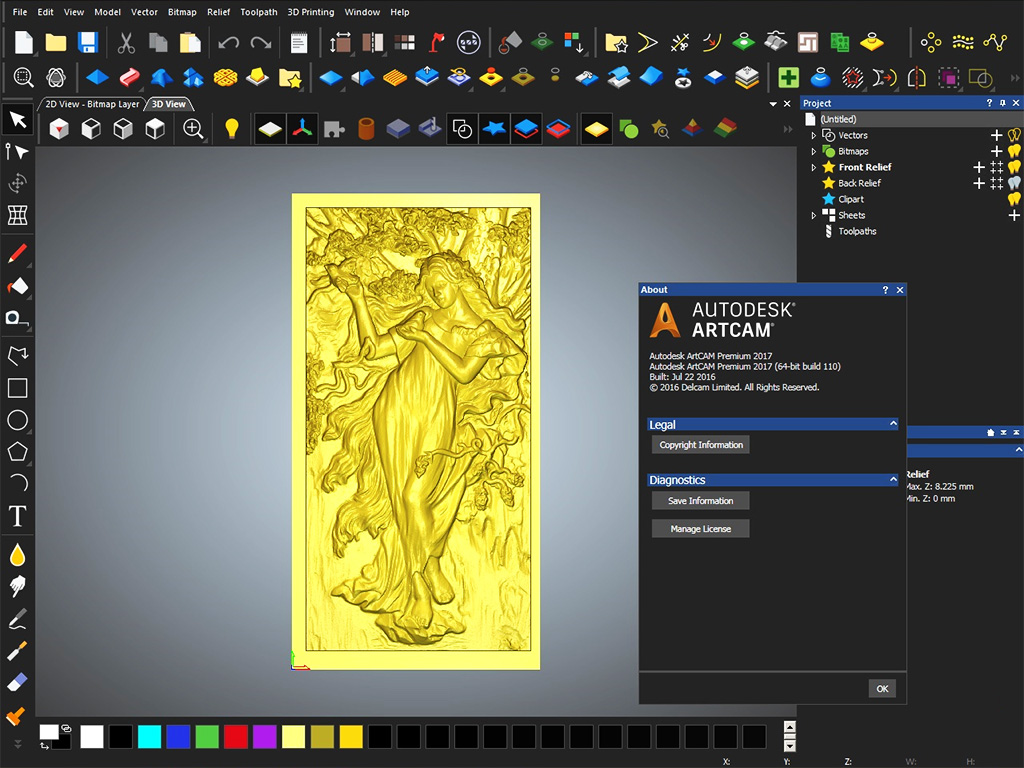
ArtCAM software can generate tool path files for relief carving. This file contains a series of instructions that specify the tool path to be followed during the processing of relief for a specific CNC machine.
Stepover, Bit Choice, and the Roughing Pass: What Forums Agree On
The biggest cause of stepped or ridged relief carvings is wrong stepover. Operators on CAMheads and CNCZone converge on the same rule: target 8–12% of the bit diameter for the finishing pass with a ball nose, and increase to 30–40% for the roughing pass with a flat end mill. Skipping the roughing pass on deep reliefs in hardwood snaps small bits — a 1/16″ ballnose plunging into hard maple is almost guaranteed to break. A 6 mm flat for roughing followed by a 3 mm or 1/8″ ballnose for finishing handles most 3D wood work cleanly. Tapered ballnose bits capture finer detail without sacrificing rigidity.
| Pass | Bit | Stepover |
|---|---|---|
| Roughing | 6 mm flat or ballnose | 30–40% of bit diameter |
| Finishing | 1/8″ or 1/16″ ballnose | 8–12% of bit diameter |
| Detail / rest | Tapered ballnose 1/32″ | 5–8% of bit diameter |
ArtCAM Is Discontinued: What to Use Now
Autodesk pulled ArtCAM from sale in 2018. The product line moved to Carveco, the same UK-based team behind the original Delcam codebase, which now sells perpetual licenses of what was effectively ArtCAM Premium. Vectric Aspire is the closest functional alternative, with broader rotary and two-sided machining tools. Fusion 360 handles CAM well but struggles with the high-resolution heavy STL meshes typical of relief work. Whichever route you take, the toolpath logic in the original ArtCAM workflow still applies. For a full overview of CNC software options, see STYLECNC's CAD/CAM software guide and the CNC programming software list.
Six steps to make relief carving path with ArtCAM for CNC router machine
Step 1. First click on the new file icon from the file toolbar to create a new file.
Step 2. Enter a height of 100mm, a width of 100mm, and a resolution of 1002x1002 points in the new model size dialog window 100.
Step 3. Choose File - Input - 3D Model Options from the menu options.
Step 4. Select the 3D model file from the directory. After opening, the model file will appear in the 3D view, and the dialog window for pasting the 3D model will also appear on the screen.
Step 5. Edit the three-dimensional model: specify the model reference X, Y, Z position or center. Rotate around any spindle. Mirror around X, Y or Z axis. Scaling model-can be scaled proportionally or stretched along an axis.
Step 6. After editing, click "Paste" and the model will appear. In this way, we can select the tool for programming, and finally save the path file as the format file specified by the relief engraving machine. Then it can be imported into CNC router for machining.
With the popularity of CNC routers in various industries and fields, there are more and more users, and more and more application software related to them.
At present, ARTCAM software is a relief design software with high usage rate. It can input some commonly used relief model formats, the function is very powerful, you can import CAD format, Pro/E format, 3ds Max format and other relief models into the software for editing.
In addition to relief carving, the CNC router software (ArtCAM) can also make profile carving and hollow carving, with very powerful functions.
Frequently Asked Questions
Drawn from current threads on CNCZone, Router Forums, CAMheads, Sawmill Creek, and the Onefinity forum.
Is ArtCAM still available to buy?
No. Autodesk discontinued ArtCAM in March 2018. Existing perpetual licenses still run, but new purchases now go through Carveco, which acquired the codebase from Delcam's original development team.
What is the best replacement for ArtCAM?
Carveco Maker+ is the direct successor for around $1,200. Vectric Aspire is the most popular alternative for hobbyists and small shops. See the CAD/CAM software guide for full comparison.
What 3D file formats does ArtCAM import?
STL, DXF, 3DS, Pro/E, and most CAD relief formats. STL is the most common for downloaded models. Carveco supports the same formats plus newer mesh types.
What stepover should I use for ballnose finishing?
Start at 10% of bit diameter for general work, drop to 8% for fine detail, push to 12–15% for faster cuts in softwood. Smaller stepover means longer machining time.
Do I always need a roughing pass?
Not always. Skip it on shallow reliefs in softwood with a 1/4″ or larger ballnose. Always rough when using 1/16″ or 1/8″ bits, or when cutting hardwood deeper than 3/8″.
Why does my relief show ridges between toolpath passes?
Stepover is too large. Reduce it, switch from flat to ball nose for the finishing pass, and confirm Z-resolution in the model is fine enough to capture vertical detail.
Can ArtCAM or Carveco output for any CNC controller?
Yes, both ship with post processors for Mach3, NcStudio, UCCNC, Syntec, and most controllers. Missing posts can be downloaded. See free CNC post processor files.
How long does a typical relief carving take to machine?
Onefinity users report 20″ × 12″ reliefs running 4–6 days on a 1/8″ ballnose at fine stepover. Larger bits, looser stepover, or a faster machine cut that to hours.
What CNC router is best suited for 3D relief carving?
A 4-axis or rotary-equipped machine handles columns and sculptural work. Browse STYLECNC's 3D CNC router range for relief-focused configurations.